
Change is essential for growth, but it’s often difficult - especially in large, complex organizations where misalignment and resistance are common. In fact, the CEB Corporate Leadership Council found that only 34% of major change initiatives succeed in meeting the goals of an organization. The same study noted that only about 25% of employees actually implement change, despite being both capable and willing to engage. So if change is so vital to an organization’s growth, and people within an organization are ready, willing, and able to make change happen, why aren’t more change initiatives successful?
Why Better Questions are the Key to Unlocking Change
The core of organizational change is about going from a current, less-than-ideal state to a preferred, idealized future state. Modern business favors a straight-line, cause-and-effect approach to reaching this ideal future state. It’s about making rapid, efficient decisions that push toward change implementation as quickly as possible. Unfortunately, this is usually at the expense of thoughtful questioning and deep discussion that provides the foundation for trust within an organization.
In his TEDx Talk, Mike Vaughn notes that “most questions are safe. That is, they surface what is already seen or understood. They lead to regurgitated ideas and opinions.” Top performing organizations, however, “ask questions that go deep. They ask questions that move us from automatic and reactionary thinking to deep thinking…and most importantly, they ask questions that spur people into action.”
Asking thoughtful, open-ended questions helps uncover deeper insights, highlights and challenges assumptions, and creates new pathways for creative problem solving. Shifting from surface-level inquiries to more exploratory "how" and "why" questions lays the foundation for meaningful change. This shift can be as subtle as reframing “How should we do this?” to “How could we do this?” The former implies a narrow set of possibilities, while the latter invites a much broader scope of exploration.
A Design-led Approach to Asking Better Questions
>>Defining the Problem
Design methods offer a structured way to navigate change by focusing first on deeply understanding the problem space. The Double Diamond Framework reminds us that before moving toward an answer, we must first explore and frame the problem. The left diamond, aka “The Problem Space,” is about diverging to uncover insights, perspectives, and lived experiences, before converging to define the challenge more clearly.
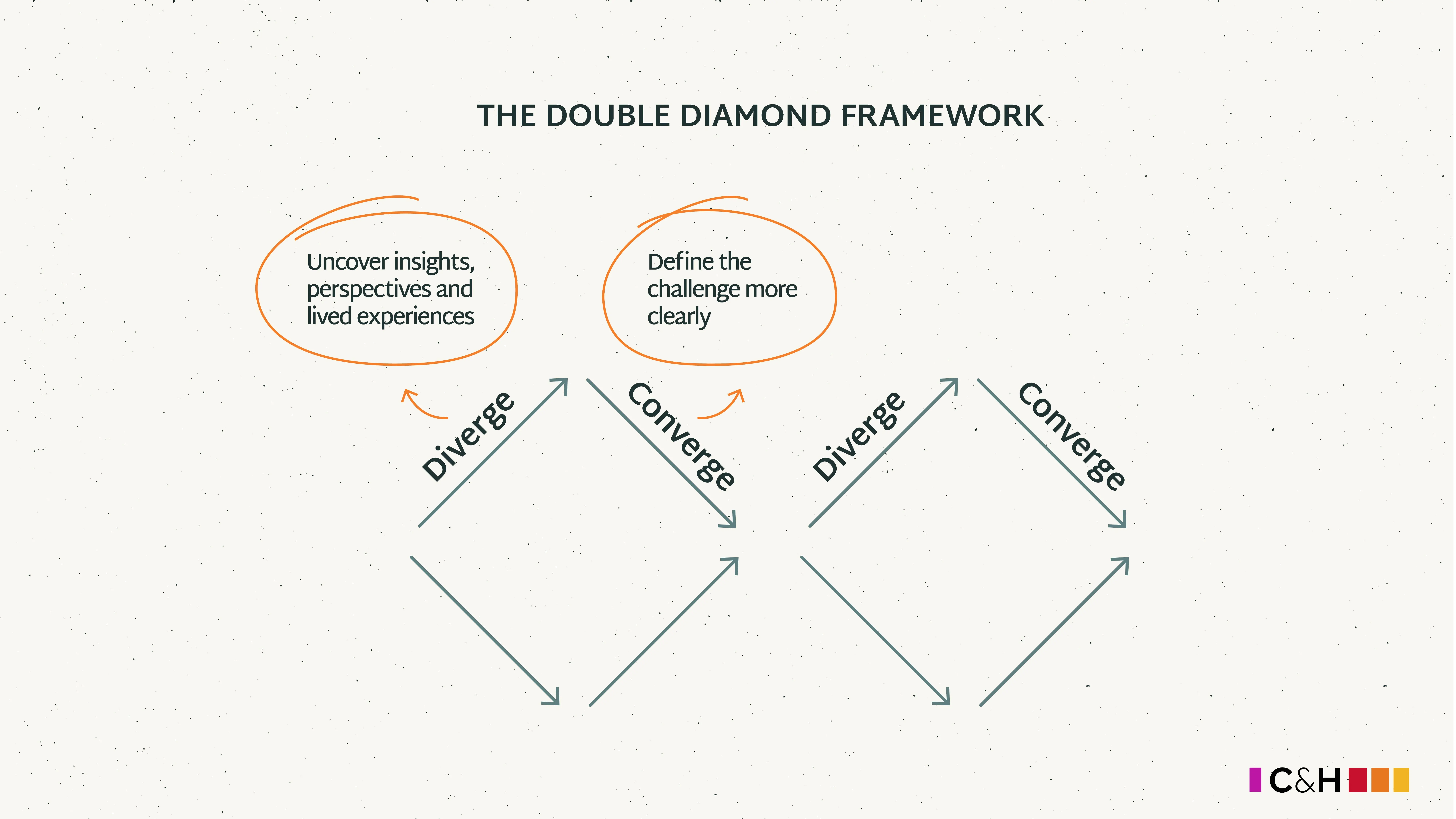
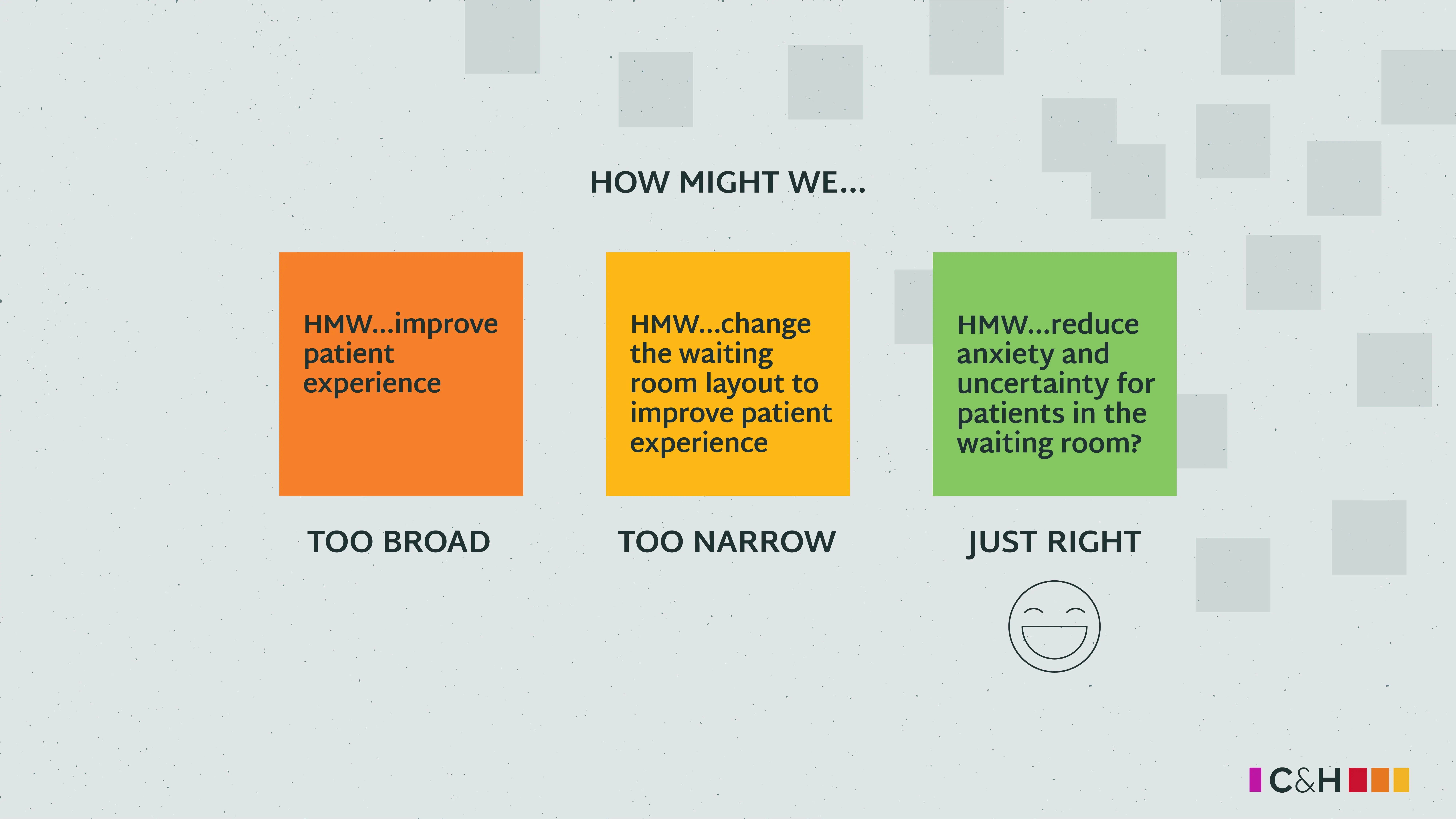
The more time a team is able to spend in “The Problem Space”, the more comfortable they’ll become in dealing with ambiguity, navigating the nuances of a given problem, and framing challenges into actionable Problem Statements. From there, designers will often ask “How Might We?” (HMW) questions to expand the possibilities of potential solutions to explore.
>>Asking the Right Types of Questions
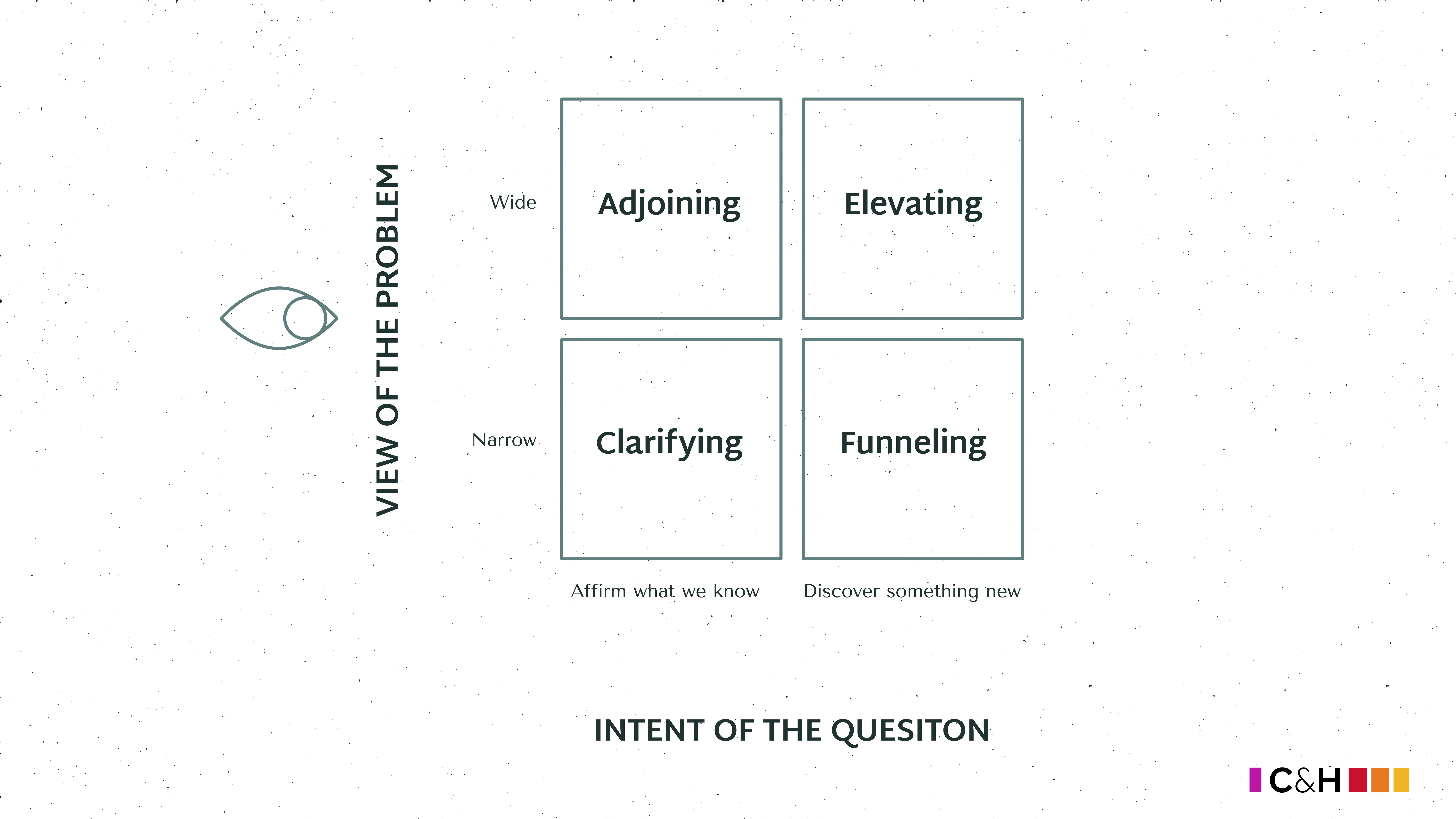
As we've discussed, asking better questions begins with having a deeper understanding of the problem you're trying to solve. This might mean expanding the view of your challenge at hand, or pushing back on the assumptions that you and your team have related to the challenge. This handy 2x2 matrix from Tom Pohlmann and Neethi Mary Thomas can help you determine the types of questions you might want to ask, depending on your view of the problem and intent of your questions. It provides a great starting point to asking better, deeper, more meaningful questions in your pursuit of sustaining organizational change.
>>Starting with Those Involved or Impacted
While how you ask a question is important, it’s critical to also prioritize who you ask as well.
The people who are most impacted by a change initiative (e.g. teammates, employees, customers, community members, etc.) must be directly involved in this process of asking the right questions and coming up with potential solutions. Design thrives on co-creation, not just consultation. This might take the form of collaborative journey mapping or Jobs-to-be-Done (JTBD) Framework efforts. When diverse voices shape the questions being asked, organizations surface blind spots, identify opportunities that might otherwise be missed, and build ownership of the eventual solutions.
A trick for asking questions like a designer? Put yourself in the shoes of a beginner - or better yet - a child. If you have kids, you know this means asking "why" a lot. As children, we tend to be much more curious and unafraid to ask questions about how or why something is the way it is. In design, we use The Five Whys method to help get to the core of a challenge or problem, as well as to establish a deeper level of trust and understanding among those we're working with.
Wrapping Up
Driving change doesn’t start with answers - it starts with better questions. By embracing a design mindset and approaching change with curiosity and empathy, organizations can move more confidently toward their preferred future.
About the Author
Zac Heisey is a designer helping healthcare organizations provide more human-centered care through strategy, creativity, and collaboration. He’s currently a Senior CX Designer on the Enterprise Consumer and Patient Experience team at Kaiser Permanente.
You can view some of his work at https://www.zac-heisey.com/ and get in touch on LinkedIn: https://www.linkedin.com/in/zacheisey/
.png)


.png)


.png)