
Process improvement isn’t always an improvement
Everyone’s facing the same pressure: do more with less. Efficiency has become the universal mandate.
But efforts to reduce costs can inadvertently trade one problem for another if you invest in the wrong solution. A solution that improves an internal process could end up creating a nightmare for customers or patients.
This happens in every industry. It can look like:
- Phone trees that reduce call center staffing needs, but multiply customer call times and frustration levels
- Automated email systems that reduce manual work, but flood inboxes with irrelevant messages
- Check-in screens that free up front office staff, but fail to acknowledge patients’ emotional needs
The common thread between these examples is a lack of human-centered insight. When empathy takes a back seat, consequences outweigh any efficiency gains.
>>The costs of efficiency without empathy
Nobody designs a process or feature with the goal of making things more difficult for the people they serve. Yet, it’s easy to think of products that have gotten progressively worse over the years, or companies that have needed to roll back updates that weren’t well-received.
When organizations design for efficiency without a human-centered approach, they risk:
- Changing a beloved element of the current experience
- Wasting time and resources on the wrong solution
- Driving even more costs (to fix what was broken)
Efficiency without empathy can make organizations faster at doing the wrong things. That’s not just fruitless; it gets expensive. Empathy-driven process improvement de-risks this work and ensures budgets go toward the right solutions.
Empathy and efficiency are not at odds
All organizations must balance efficiency and empathy. A strong customer experience without business viability isn’t sustainable — and lean processes that amount to a poor experience stunt success.
Like colleagues in a board meeting, empathy and efficiency work toward common goals from different angles. There’s a healthy tension between the two. By balancing each side of the equation, organizations deliver experiences that work for customers and the business.
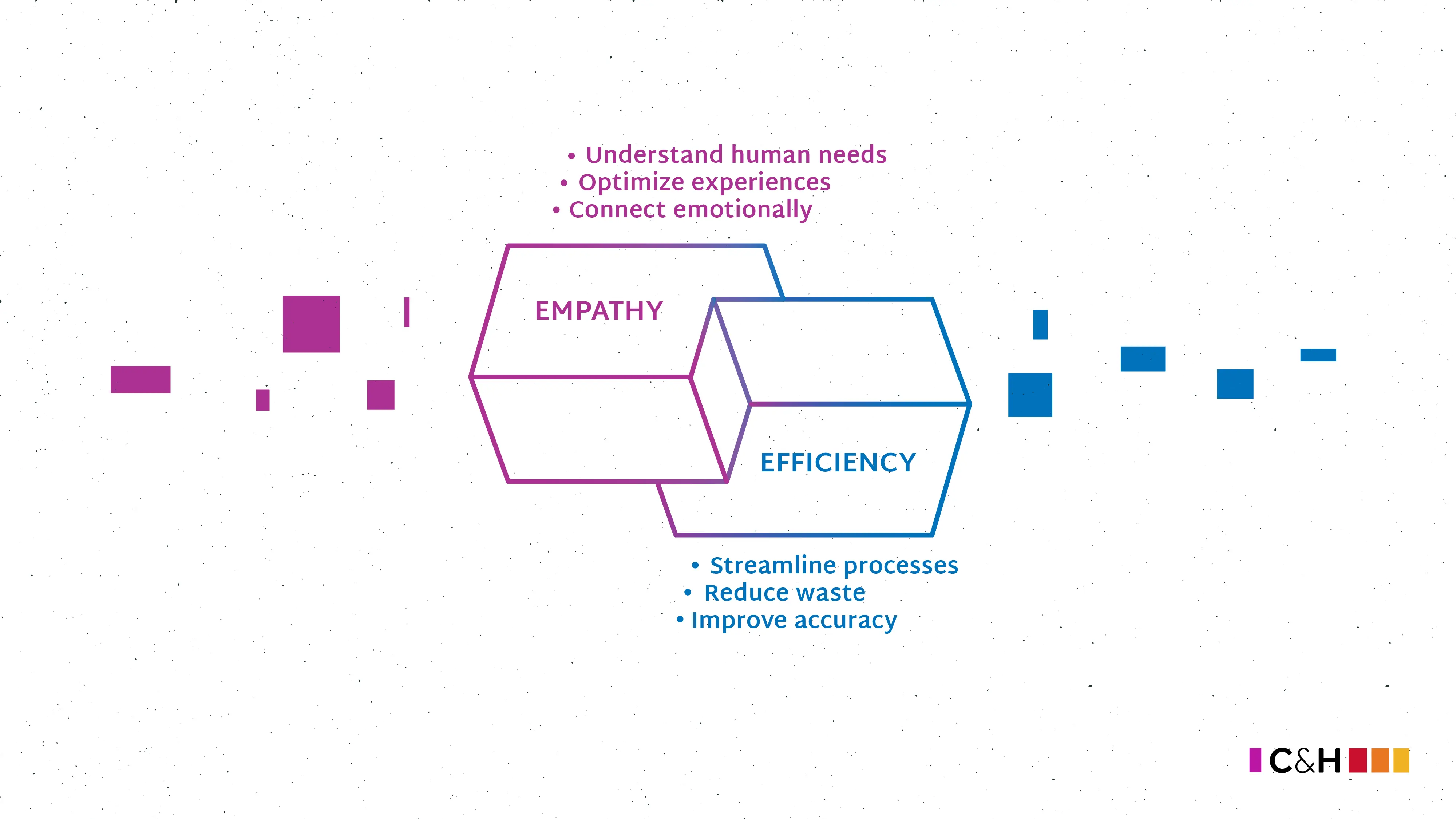
While both sides share the weight, empathy should lead the process. Efficiency tends to come naturally, as it represents the internal point of view. Leading with human-centered insights ensures you’re achieving a true balance.
>>Why human-centered process improvement works
Organizations tend to start efficiency initiatives with their own pain points (like drawn-out processes or high-cost staffing areas). But a human-centered approach starts with the pain points of those they serve.
Empathy-driven process improvement aligns business needs with human needs so that efficiency supports both.
By starting with empathy, teams solve the right problems
Starting with empathy (human-centered insights) helps you identify where efficiency improvement makes sense and how to do it right.
Speaking with customers and patients helps teams understand experiences from their perspective. This includes the emotional moments, friction points, and high-impact touchpoints that affect consumer decision-making but might slide under the radar.
Using an approach like design thinking for efficiency identifies challenges and opportunities from a customer’s point of view, so you’re working on something meaningful from the start.
It helps teams approach efficiency from a different angle
Every problem has a number of solutions. To surface them all and choose the right ones, look at the situation from an external lens.
Empathy-driven process improvement shifts the focus from “How can we make this faster or leaner?” to “How can we make it better for customers?” This mindset helps teams avoid making efficiency-focused decisions that would harm CX and eventually send them back to the drawing board.
Related: Empathy-Led Innovation: How to Build What People Truly Want
>>Empathy de-risks investments in efficiency
The process of research, development, and testing solutions is an investment in itself. The cost of implementation — new technologies, training, resources, and all the time it requires — further drives home how important it is that new processes pan out.
Design thinking reduces the risk of efficiency initiatives by validating that solutions will work. By co-creating solutions with customers, teams can test ideas and gather critical feedback at early stages.
Starting with empathy means:
- Targeting the right opportunities for efficiency
- Focusing on human-centric solutions throughout the process
- Gaining the foresight to pivot and prevent wasted costs
Empathy is not a luxury
In financially constrained times, empathy often takes a back seat in the name of efficiency. But these are the times when empathy is most important.
The risk of wasted investments and costly missteps carries even more weight when efficiency is the goal. When it’s crucial to invest in the right initiatives, de-risk the process with an empathy-led approach.


.png)


.png)