The problem most teams face after design thinking
Design thinking workshops are great at generating ideas. The challenge is the implementation stage of design thinking, where you shift from what's possible to what’s next.
This is where many organizations struggle. After all the ideation and exploration, teams often walk away with several ideas but no overarching vision to guide their next steps.
This is the part of the process that matters most — figuring out:
- Which ideas to move forward
- Who will implement them
- What resources are needed
The implementation phase is more than choosing the most promising ideas and rolling them out as quickly as possible. Successful implementation requires a defined plan.
>>Why the implementation plan is important
An implementation plan ensures you benefit from the design thinking work you invested in. Otherwise, you risk losing the momentum, running into avoidable obstacles, or failing to implement anything at all.
Having a plan drives momentum
After a design thinking session, when your team returns to their everyday work, other issues will naturally take precedence over the initiatives that came out of the workshop.
Those big ideas may be the future, but your team still has to manage the present reality. Without scheduled follow-ups and defined ownership, progress may slow down or halt completely.
It helps avoid preventable problems
The opposite can also happen — progress may keep pace, but move in the wrong direction. Without aligning on a clear plan to guide implementation, you could run into:
- Bandwidth issues: The people in charge of delivering the new experience (frontline staff) might lack the time or training to make these changes.
- Resource constraints: Your organization may not yet have the resources to implement some of the ideas effectively.
- Unexpected conflicts: The new touchpoints could “break” the experience in unforeseen ways, causing issues downstream.
It supports change management
The problems above often come down to a lack of cross-functional collaboration. By coming together to discuss the details around implementation, you can bring potential issues to the surface, plan around them, and garner buy-in across the organization.
Change management is a key part of design thinking. You’re going to have some big initiatives come out of this work. To get them done, it’s not just a matter of building the new solutions, but making sure you’re ready to build them … knowing exactly what needs to be done and bringing in the people who will be tasked with doing those things.
- Steve Koch, Co-Founder, Cast & Hue
>>Key steps to support implementation after design thinking
After a design thinking exercise, don’t rush to implement solutions right away. The time you spend in this next phase of problem-solving will set you up for more success down the road.
1. Prioritize the ideas
The design thinking process focuses on generating a large quantity of ideas. This next part focuses on quality.
You may end a design thinking workshop with 50-100 (or more) potential solutions to a challenge. But only a few of these ideas will sit within the winning trifecta that de-risks innovation: desirable to customers, feasible for the team to execute, and viable to the business.
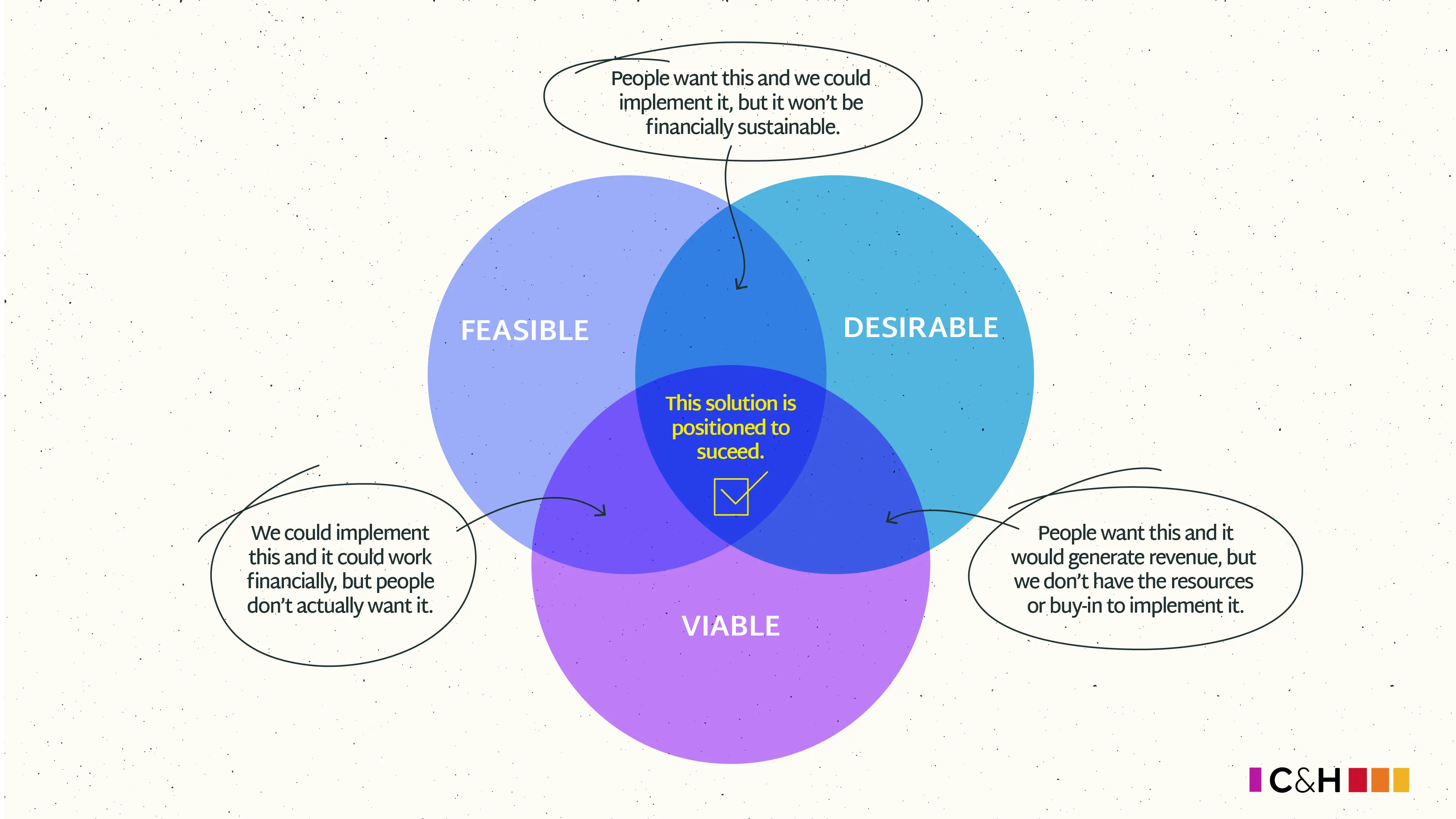
A structured prioritization workshop is a critical next step after experience design work. At Cast & Hue, we facilitate these workshops to help teams:
- Assess which 10-20 solutions may be worth implementing
- Identify the 3-4 highest-value opportunities to focus on first
- Surface any conflicting ideas or priorities
- Align stakeholders and implementers
- Assign tasks to specific owners (not just a general committee)
2. Align on the overarching vision
Often after design thinking, you’re implementing more than one solution around the same time — but they still need to contribute to a cohesive, consistent experience.
To ensure this happens, create an experience blueprint: a document that defines the vision for the ideal experience and connects the dots from touchpoint to touchpoint. This artifact will serve as a shared resource across teams, guiding implementation decisions and everyday delivery of the experience.
What do these documents look like, and what should you include in yours? Learn more about experience blueprints.
3. Create the implementation plan
Having prioritized your highest-value ideas and documented your vision for the experience, it’s time to determine how you’ll execute the blueprint. This planning should be completed by the core team who’s responsible for executing the new experience.
Define exactly what’s needed to implement the ideas, answering key questions:
- Who will champion this work, and who will support them?
- What metrics will we track around this initiative?
- What resources do we need to execute this well?
- What does a realistic timeline look like?
- What are the milestones, and who will own each one?
Poke holes and encourage participation in the conversation (or work with a facilitator to keep the session productive). The more questions you answer at this stage, the less risk of succumbing to roadblocks later on.
Need a hand with design thinking implementation?
The ideas that come out of design thinking only matter if they become reality. And they only become reality through intentional prioritization, clear ownership, and a focused implementation plan.
At Cast & Hue, implementation isn’t an afterthought; we consider it the sixth and final step of the design thinking process.
This means that our design thinking consultants support teams with the work leading up to implementation. Cast & Hue facilitates prioritization workshops, builds experience blueprints, and helps map implementation plans that guide effective change.
Have a project in mind? Reach out to explore how we can approach it together.


.png)


.png)